When it comes to old age, I look forward to be a senior citizen very much. The idea of being retired with days to myself to do whatever I like is amazing. A traditional retirement to focus on myself and my family would be the primary goal (Finley, 2020, Positive Aging, slide 25). My ideal retirement would be at 60 and with a full pension and living somewhere with family and friends nearby. Hopefully by then, I’d have plenty of children and grandchildren and a home large enough for them with some livestock and dogs on the property.
Since I hold retirement in such high regard, I plan on being the coolest old man I can, breaking the negative stereotypes associated with aging and carrying a sense of pride and leisurely active lifestyle. Linda Fried’s article “Making Aging Positive” from The Atlantic explained the effect of positive aging stereotypes on health. An elderly adult with positive aging stereotypes lived an average 7.5 years longer than those who held negative stereotypes. Old age is not the end of your life and doesn’t have to be the end of the best parts of your character either so I intend to do all the things I want to when I retire.
In order to help see this goal through, there obviously will need to be a lot of work done in a career with plenty of benefits. Luckily, there are plenty of government jobs available in rural Idaho that should help complete the needed pension. The only real concern would just be making it to old age. One of the most important changes that needs to be made is my diet since it’s not the healthiest so I can reduce the risk of disease. Activity-wise, I plan to do a lot of walking and hiking on top of any other outdoor sport I might find in Idaho. I want to always have a dog no matter what household I’m in and having one to talk on walks will be good for me and them. Not only is a dog a meaningful thing to have, but it also keeps one engaged with their home life. No matter what career I choose, as long as I’m in shape and have a loving home, happiness will fall into place, making aging healthily a breeze.
School has been the foundation of my years and has taken up most of my time. Frankly, I’m just glad to be done with it soon. I have no problem with working and enjoy my free time. Once I’m in Idaho, I think life will be much easier and I’ll have everything I need.
Moving forward in Idaho, there will be plenty of opportunities to work in my small town or any of the plenty neighboring towns. One thing that I saw in town next door to mine was a high school. My mother even sent me some information about job listings there. I’ve always thought, but not too seriously, about working in a high school. Since I have been schooling for so long, it’s not hard for me to think about what I would do if I were a teacher or a coach. I love history and I love rugby and football so I could see myself doing either one if I really needed to when I move to Idaho.
As a teacher or coach, it wouldn’t be too hard for me to make sure that I encourage Positive Youth Development into my work with the high school students to make sure that they are engaged with their schoolwork. Engagement in school leads to “development of youth who invest their time and energy to achieve positive and valued academic and life goals,” (Finley, 2020, Positive Youth Development, slide 34). I’ve had countless day-dream lectures that I would give while I was sitting in a class, bored and wondering how I would do it better. I’ve stood and wondered if my coaches were really explaining something as clear as they thought they could and what I would show to make things easiest to understand.
Over the years and (still) to my surprise, some people think history is a boring subject. History is one of the most important subjects and that’s why it’s important to me that I keep students engaged. I saw a meme recently that said something like “English and History teachers were always the realist ones, it’s the Math and Science teachers who were cops.” My point being, I agree, history teachers should be promoting a fun and relaxed environment to make everyday interesting and not just some long story to tell. I’d keep every lecture visually and audibly aided with plenty of interaction. This coupled with an open door policy and being available for students would help foster a place where education is valued and engaged.
I never wanted to be a teacher when I was younger but during high school, all it took was one excellent teacher to make me realize that education can be fun, funny, and rewarding, that not all teachers are bossy and suck the fun out of everything. Teaching is really the only field that I would be okay with going into that involves the youth and I think this way because I understand how important the role of a teacher is in the shaping of a generation.
I want to write about three of acts of kindness that have happened in the last few days with two friends of mine. Two of these events were with a best friend of mine, Kevin, and with a good friend from Whittier College, Michael. These events were by no means “super-hero” or “altruist” acts of kindness, at least to my point of view. To my friends, I’m starting to take notice of more often, these are the small yet valuable moments. The kind where they tell me they are glad to have me as a friend.
Over two visits to Kevin’s house to hang out and watch movies like the usual. The first visit, I came with little cash. Kevin had no cash after recent expenses but wanted a pack of cigarettes. Kevin would ask a favor where I buy a pack for him. No favor was necessary but Kevin was grateful in the end.
The second visit came only two days or so after. We agreed we should eat separate and before I get to his house because we’re poor and don’t want to spend money. However, after an hour into sitting on the couch, Kevin gets hungry. He was so lucky that that very morning, my mother gave me a $20 In N Out gift card which I remembered. So he drove us to In N Out where he got his burger, fries, and drink while I would just get fries and a shake to hold me over.
Tonight, Michael had told me over text that he would like to cut back down on smoking. He told me that he had smoked twice since the beginning of January. He’d sounded like he was ashamed by this number. I really didn’t feel like I was trying to be nice, rather funny, when I said this but “Twice is fine, you cry baby. Don’t sell that short,” seemed comforting to him. He laughed and said I was supportive.
Both Kevin and Michael do tell me they’re glad to have me as a friend but I never verbally communicate such behavior back for whatever reason. It doesn’t feel like I’m doing any real sacrifice or heroics but it’s these little things they see I do for them as friends that make it worth while.
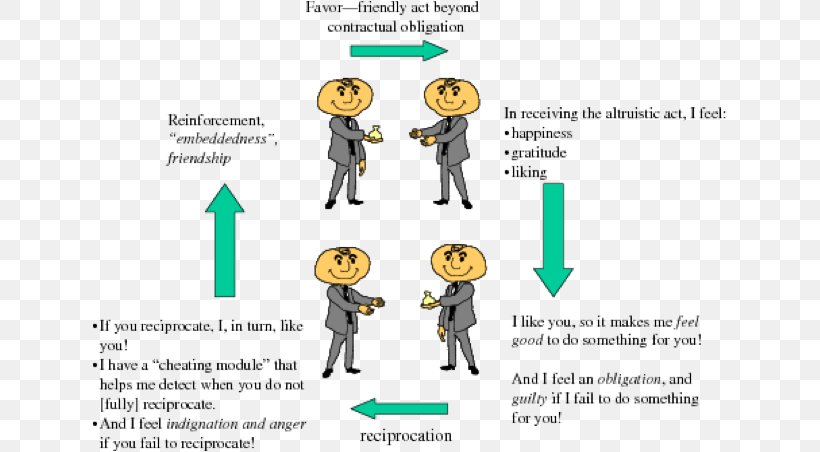
I suppose my way of looking at these acts is more of an egocentric perspective. I understand they need things of me and I know if I were them, I’d want or welcome help. I would also say that part of the purpose for me doing these is the social explanation that I do these things so they’ll like me. I know that they’re true friends when my generosity is reciprocated eventually (Finley, 2020, Caring and Doing For Others, slide 4&5).
People should do these little acts of kindness with the same motivation I have for doing them. As long as you are surrounded by true friends who will reciprocate your care for them, these little acts of kindness will be rewarded in the end. It’s worth it in the end to make short term sacrifices once in a while.
When it comes to my personal and friendly relationships, I tend to end up using both sides of the green and red cape. As discussed in today’s lecture, the green cape is used to focus on the building up on positive aspects of relationships while the red is used to deal with any of the negative aspects (Finley, 2020, Positive Relationships, 27). Typically, I have a very carefree attitude when it comes to being with people I already have an established relationship with and it takes a lot for me to move away from someone.
For this reason, I end up using the green cape in day-to-day activity and conversation when talking with friends. The only real time the red cape comes on is when negative things are brought up first by the others party. I have no problem with talking out against problems, but prefer to avoid confrontation on matters that could be resolved separately. People are different and trying to make major changes to their character is not always possible.
As far as improving my green cape attitude in relationships goes, I want to make sure my friends and I are all becoming the best people we can. I can utilize the behavior of character to aid this process (Finley, 2020, Positive Relationships, 28). By knowing my friends’ and my character, it is easier to build up upon each other’s strengths and weaknesses when we need each other.
My friends often use gratitude and express their joy that I’m their friend. I however do not often reciprocate such feelings verbally. Frankly I think it’s already understood between my friends and I how much are friendship is valued. I never get into confrontations with my friends. Still, I could make more of an effort to express my gratitude for my friends since I am leaving for Idaho after graduation.
Corporal Leslie “Bull” Allen was a stretcher-bearer for the Commonwealth of Australia during World War II. He was known for his size and courage in battle to save his brothers in arms. Allen had already taken risks to save men before while serving in the Middle East but came to fame for his efforts on Mount Tambu in New Guinea during the fight against Japanese forces. Despite being diagnosed with anxiety during his service, Leslie Allen would overcome fear to go on and receive a Military Medal (British & Commonwealths award) and a Silver Star (American award) for his bravery.
The Battle for Mount Tambu was a combined effort of Australian and United States soldiers in part of a larger campaign to remove the Japanese from the island. The Australians and Americans would fight uphill battles against well-defended Japanese troops. On Mount Tambu, Allen would charge back and forth through enemy fire to reach wounded Americans and carry them back to safety. It was not ordered nor expected of him to put himself at risk but did so anyway for his comrades. Allen went up the mountain twelve times and came back down twelve times to carry twelve men to safety.
Leslie Allen’s story is particularly inspiring to me because it is one of those stories that shouldn’t seem possible. Someone took a risk not once, but twelve times and came out unscathed to save others. My reaction in this way correlates with the elevation outcome of awe. Awe is the reaction to something that cannot be immediately understood (Stellar, 2005). Allen himself might have felt compassion toward the wounded men. Compassion, Stellar describes, is the “feeling concern for another’s suffering accompanied by the motivation to help and is experienced toward a variety of targets ranging from others who suffer emotionally to those in immediate danger.” Knowing that there were dying men not far from him, Allen had to set fear aside and do what was right.
Reading about someone who suffers with anxiety putting others above himself, even when his life is at risk, makes me want to become a better person and exemplify the same kind of strength Allen had to carry on even though he was probably terrified. Thomson and Siegel’s 2005 journal article describe this as one of the effects of elevation, witnessing someone else perform good deeds. As I’m sure Allen inspired the men beside him, his story inspired me and increases my desire to better myself. I hope everyone can find the strength within themselves to help others whose lives are at risk, God forbid, should they ever be put in such a position.
My number one character strength from today’s survey revealed that judgement was my number one traits. Frankly this doesn’t surprise me. I tend to weigh in every option I can when making a decision and choosing based on what will benefit the most while causing the least harm. This aligns with my third strongest trait, perspective. Friends of mine often ask for my opinion and help on counseling when they want to make decisions. Mediation comes easy to me this way, using my sense of judgement to make clear-conscience decisions. Going back to my scoring for authentic happiness with activities, finding meaning in things I do is most important to me. judgement plays into this for me since I feel like I don’t want to be wasting mine or anyone’s time when committing to decisions. This is what makes me want to analyze the most I can and make the best decision possible with the information presented to me.
In order to expand on the strength of judgement, I tried to use it to apply to one of my weaker traits. Self-regulation came 20th of 24. When answering questions about my discipline, focus, and resistance to temptation, I was fairly neutral, knowing that these skills I have in some departments but not all. In particular, I wanted to improve my self-regulation by managing my discipline, focus, and resistance with my sense of judgement.
I normally look at these shortcomings and dismiss them, telling myself that it is harmless or just a part of my character. Using the information from today’s lecture, I wanted to use my sense of judgement to the extreme, taking everything I do into consideration as to whether it will benefit from me or not and whether this is something that needs to be done to beat my shortcomings. With this ever-alert attitude, I was able to overcome procrastination and laziness, doing simple things like cleaning my room and getting over the attitude of wanting to skip rugby practice.
While this activity did help me beat those moments of weakness, it was tasking to over-analyze everything. But, when it was moderated to the things I don’t like doing but know need to be done, it helped me push myself to make better choices for my own benefit. This kind of attitude when it comes to basic chores and duties can help someone get their responsibilities done. It helped me and I would recommend it. It’s important to be honest with and ask ourselves, “Am I really helping myself by putting these things off? How much more time can I have to myself to do better things?” We may not want to do things in the moment but it helps build our character to work harder.
Samuel Clemens was born in 1835 in Missouri. He had grown up in a family with six siblings, three of whom had passed away in his youth. His father, John Clemens, had died of illness when he was only eleven. Growing up, Samuel went into the printing industry and eventually moved to New York to work in a printing union.
Despite this line work being the majority of his education, Samuel Clemens would do plenty of travelling and find work training to be a steamboat pilot and later as a miner. He would go on to publish many memoirs about his experiences under the pen name “Mark Twain.” Later, he would go on to print articles for newspapers and would give lectures on writing and storytelling.
Twain moved to Connecticut where he would settle with his wife Olivia and his three daughters. Mark and Olivia birthed a son but he would not live past infancy due to illness. It was in Connecticut that Twain would go on to publish many novels including his two most popular stories based on his childhood, The Adventures of Tom Sawyer and The Adventures of Huckleberry Finn.
Mark Twain began to write a final recollection of his life in an autobiography toward the end of his life. He didn’t wish for it to be published in its completion until long after he was gone. Twain’s biography is written traditionally. It is not a linear narrative of his life but a series of memories from key points in his life. Volume 2 of his autobiography makes many mentions of his daughter Susy’s biography. He takes much pride in her writing and uses her own observations of their family to examine his life.
“It is as I have said before. This is a frank historian. She doesn’t cover up one’s deficiencies, but gives them an equal showing with one’s handsomer qualities. Of course I made the remark which she has quoted–and even at this distant day I am still as much as half persuaded that if the lady mentioned had been present when the Creator said ‘Let there be light’ she would have interrupted him, and we shouldn’t ever have got it,” (Twain, Vol. 2)
Mark Twain’s eldest daughter Susy and wife Olivia had passed away almost a decade before he did. His middle daughter, Clara, had moved to Europe, leaving him with just his youngest daughter, Jean. The two had spent much time together and were close. On Christmas Eve of 1909, his daughter Jean had suffered an epileptic seizure in the bathroom and died.
“Why did I build this house, two years ago? To shelter this vast emptiness? How foolish I was. But I shall stay in it. The spirits of the dead bless a house for me. It was not so with other members of my family. Susy died in the house we built in Hartford. Mrs. Clemens would never enter it again. But it made the house dearer to me. I have entered it once since, when it was empty and silent, but to me it was a holy place and beautiful. It seemed to me that the spirits of the dead were all about me and would speak to me and welcome me if they could. Clara and Jean would never enter the New York hotel which their mother had frequented in earlier days. They could not bear it. But I shall stay in this house. It is dearer to me tonight than ever it was before. Jean’s spirit will make it beautiful for me always. Her lonely and tragic death—but I will not think of that now,” (Twain, Vol. 3, Ch. 32)
Mark Twain and daughter Jean
Twain had experienced much death throughout his life. He lost father and two siblings in his youth and his brother died on the steamboat they both worked on. Mark Twain’s life shows such qualities that we can find in creative people (Finley, 2020, slide 45, Creativity, Excellence, and Passion). His childhood was fraught with hardship and death, he was mentored in printing and later decided to follow his dream and work to be a riverboat captain. Regardless, Twain had always been intrinsically motivated by family and friends, never staying too far away from them and always coming back to see them, writing about them, or using them as characters like his childhood friend, Tom Blankenship, the inspiration for Huckleberry Finn.
Mark Twain has been attributed as the Father of American Literature for writing works of fiction that not only have a compelling narrative, but capture the essence of commentary on America in touching and satirical ways. Mark Twain changed the domain of American literature and is seen as the inspiration for all American authors following his life according to Ernest Hemmingway. The Adventures of Huckleberry Finn was credited as the first great American novel, a required read in some American English courses.
Mark Twain’s life had been difficult in his youth. He was surrounded by death but dared to explore and follow his passions. His creative output would inspire him to write classic novels and he has been cemented as one of the greatest authors of all time.
Authentic Happiness Theory by Martin Seligman (2002) is used to help gauge one’s happiness through activity. There are three scoring criteria: pleasure, engagement, and meaning.
Pleasure is the immediate reaction we get, usually in the form of satisfaction or conversely, negative response. Engagement is how much attention we can keep on something. This can range from fully focused to focused to disinterested. Lastly, Meaning is what sense of purpose we have from doing something. Do we understand why we are doing something? Is there some higher purpose we seek to achieve? Or do we not know why we’re even doing something?
My personal score for the Authentic Happiness Theory test showed a prioritization of meaning over pleasure and engagement. Personally, this makes sense to me. I want to be sure that whatever I am doing has some sort of value rather than just rely on how much I could enjoy or lose myself in that activity.
One example is from Whittier College where I joined the Orthogonian Society, one of the male fraternities on campus. I went to an all-male high school where one of the main values practiced was brotherhood. Going into college, I knew I wanted to join a fraternity to find a similar sense of brotherhood. This is what drew me to the Orthogonians. I could see from how they interacted that they were close and had meaningful values and practices. Knowing that joining a fraternity would be a life-long commitment, I wanted to be sure I chose one that I would get the most out of.
Another example of meaning in my activity was playing rugby. Growing up, I thought I would be playing football. However, I started to learn about rugby after my brothers started playing for local clubs once they’d seen a game played in Ireland. I began to play rugby and learned how valuable of a sport it is not just for physical fitness, but for how much of a character-builder the game is. Rugby teaches its players to play with honor and respect for your opponent and the referee. Its much more of a social sport than football. Its not uncommon to swap jerseys or eat with your opponents after a match. While I do get plenty of pleasure and engagement from rugby, the meaning behind it was the larger picture part that got me invested.
While I agree with my scores that I do hold meaning in the highest regard, I would like to be able to be more engaged with activities that do not hold much pleasure or meaning. Sometimes we have to do things we are not comfortable with or disinterested in. I can try to come up with some sort of silver lining of meaning but its not worth it if I can’t find some sort of pleasure. We have to be sure to turn our attitudes around and find happiness in whatever we do.
Happiness is “Satisfaction with what you have and who you are,” “To be content and loved,” “Enjoying the little things and being grateful,” and “Reading, sleeping, and laughing.” These are some answers given from folk on the Whittier College campus when asked what happiness means to them. While I think all these answers are correct, my answer can be boiled down to one word that can still hold the subjectivity behind happiness.
The answer to happiness can vary from person to person but they can all be traced to one simple requirement: stability. My definition of stability is as broad as everyone else’s answer for happiness. Stability can range from financial to mental or physical health to relationship stability. As long as these things are met with care, happiness will fall into place. Financial stability comes in the form of having a secure income and avoiding debts or living paycheck to paycheck. Stability of health requires maintaining physical fitness, a healthy diet, and keeping emotions and mental health in check. Relationship stability means avoiding hurtful connections with individuals who do not contribute to your happiness. This can also expand to keeping close with your family and best of friends.
This idea that stability can create happiness can be connected to Peterson’s Three Pillars of Positive Psychology. A positive subjective experience can come in many forms. Having a good time with friends or setting personal goals for exercise can be rewarding on one’s happiness. Positive individual traits cannot be achieved without personal accountability. If someone is not responsible enough to ensure their own happiness, they would not be someone that exhibits healthy individual traits that can create a stable life. Lastly, surrounding oneself with positive institutions (clubs, sports, friends, family) will foster personal growth. Humans are social creatures and having the right social connections will increase that stability and happiness (2006).
None of this is really far off from what the people on Whittier’s campus told us when they described happiness. Every person gave us their own answers which were not exactly like the others. Some took happiness from activities, some from personal satisfaction or contentment with who they are, and others found happiness in the personal connections they had with others. Failure to adhere to any of these things would require an overall lack of stability in each of their departments and would therefore lead to a failure to adhere to each of the Three Pillars of Positive Psychology.